
Secret Paris: a step-by-step guide to the heart of medieval Paris
Category : Hotel Corona Rodier
When the blazing sun beats down on the capital, one of the best things to do is to leave the grand Haussmannian boulevards behind and venture into the narrow streets of 12th-century Paris.
Amidst cobbled alleyways, shaded cloisters, repurposed gravestones and the remains of royal walls, here is a walk lasting around 1½ hours that you can enjoy at your own pace, away from the tourist crowds.

Click on the map or follow this link to open Google Maps
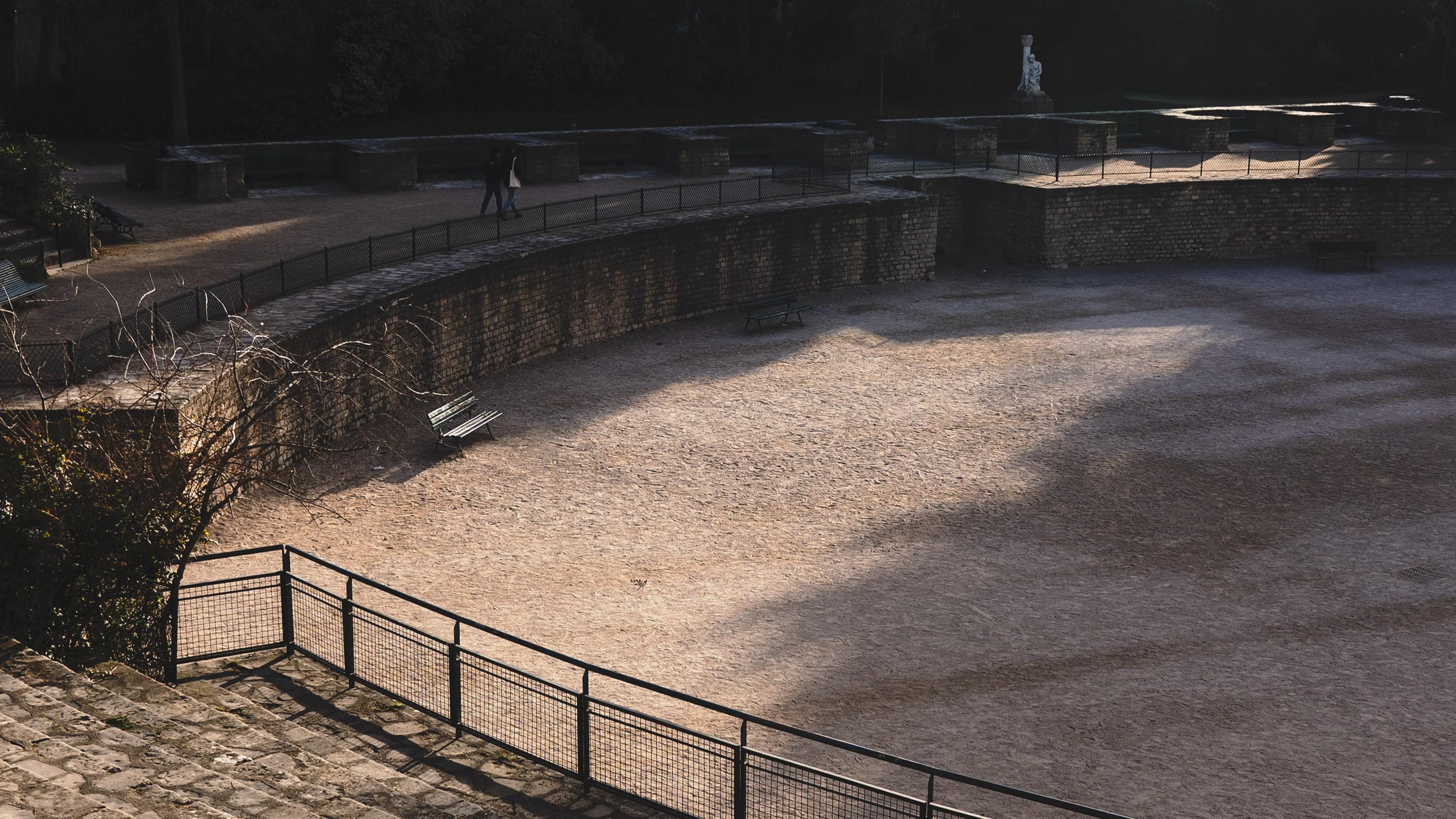
1. Starting point: Les Arènes de Lutèce (5th arrondissement)
- Access: 49 Rue Monge / Place Monge metro station
Before the Middle Ages, there was Lutetia. Built in the 1st century, this Gallo-Roman amphitheatre could accommodate up to 15,000 spectators. During the Middle Ages, the site was used as a stone quarry before being completely buried underground, then rediscovered in the 19th century.
- Secret detail: Look out for the niches in the surrounding wall where the actors used to sit, and the cages for wild beasts.
2. Step 1: René-Viviani Square & Saint-Julien-le-Pauvre Church (5th arrondissement)
- Directions: Walk up Rue Monge, then take Rue Lagrange towards the Seine.
Built in the 12th century at the same time as Notre-Dame Cathedral, the Church of Saint-Julien-le-Pauvre is one of the capital’s oldest religious buildings. It was here that the first students and teachers of the Latin Quarter used to gather.
- A little-known fact: The square next door is home to the oldest tree in Paris: a staked black locust tree planted in 1601.
3. Step 2: The Chanoines neighbourhood (4th arrondissement)
- Directions: Cross the Pont au Double, go round Notre-Dame on the left and turn into Rue Chanoinesse.
This unspoilt corner of the Île de la Cité escaped Baron Haussmann’s major redevelopment works. It retains the exact layout of the Notre-Dame cloister, where the cathedral’s canons once lived.
- Hidden gem: At No. 20 Rue Chanoinesse, take a peek through the gate of the passageway: the courtyard floor is entirely paved with genuine engraved slabs taken from ancient medieval tombs.
4. Step 3: The Hôtel de Sens (4th)
- Directions: Cross the Pont Saint-Louis towards the Marais, take Rue de l’Hôtel de Ville, then Rue du Figuier.
Built between 1475 and 1507 for the archbishops of Sens, this palace is one of the few remaining examples of Gothic civil architecture in Paris. Queen Margot resided here in the early 17th century.
- Secret detail: Looking at it from the front, take a close look at the top left-hand corner of the façade: a cannonball fired during the Three Glorious Days in 1830 remains embedded there.
5. End of the route: The Philippe-Auguste Wall (4th arrondissement)
- Directions: Walk up Rue du Figuier and turn right onto Rue des Jardins-Saint-Paul.
Before setting off on a crusade in 1190, King Philip Augustus ordered the construction of a 6-metre-high protective rampart around the town.
- Secret detail: You are now standing in front of the longest surviving section (around 60 metres). The wall now runs alongside a sports ground, and two original medieval defence towers are still clearly visible.
Whether you’re seeking refuge from the heat beneath centuries-old vaults or strolling along the cobbled streets in the shade of royal walls, this medieval itinerary offers a timeless escape in the heart of the Parisian summer.
Featured photo: Amandine Goetz