
The History of the Grand Palais: An Epic Tale of Iron and Glass in the Heart of Paris
Category : Hotel Corona Rodier
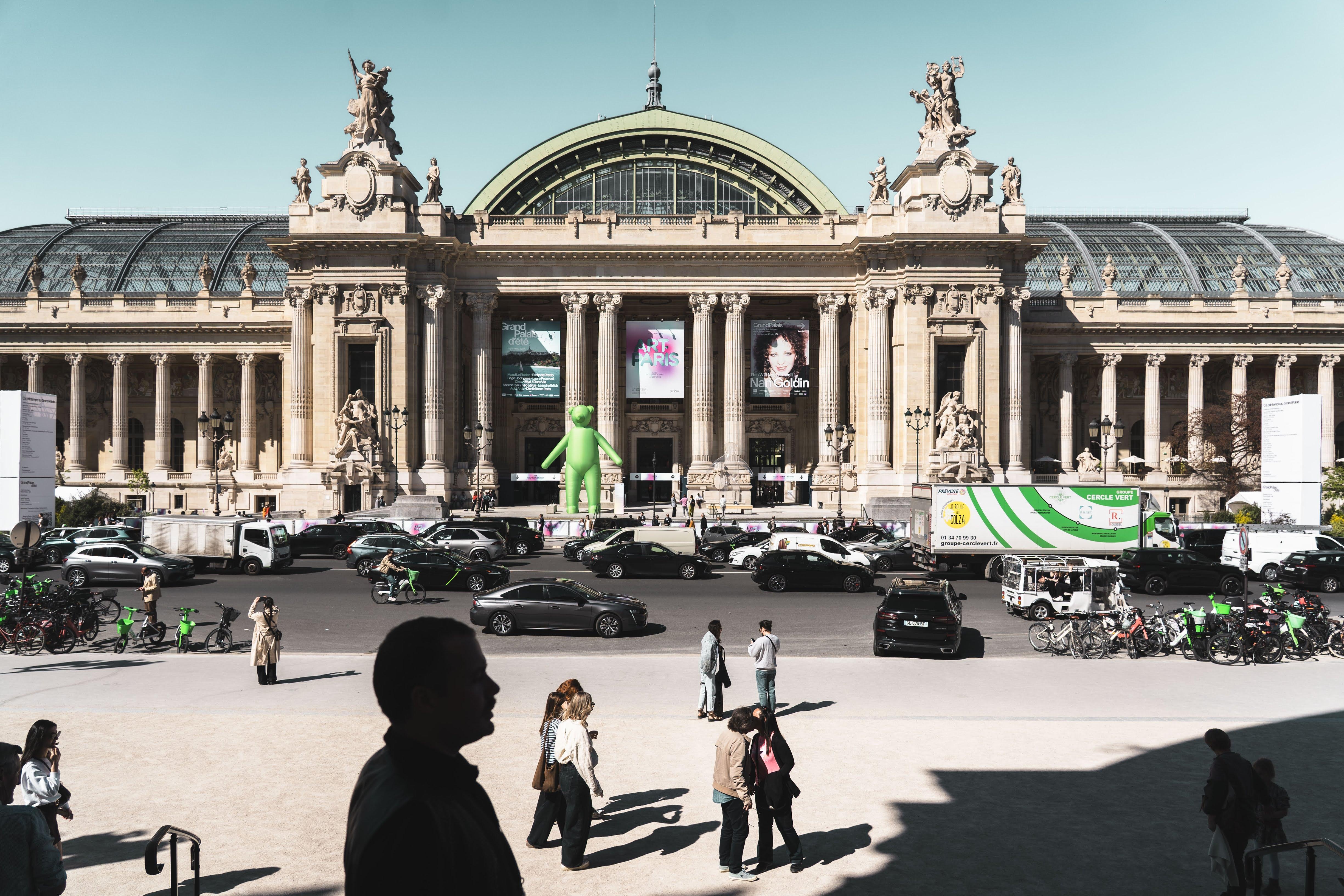
Overlooking Avenue Winston-Churchill, opposite its ‘little’ brother, the Petit Palais, the Grand Palais is much more than just a monument: it is a symbol of France’s cultural influence. From architectural feats to structural crises and spectacular revivals, this is the story of a glass giant that has stood the test of time with unwavering elegance.
The Genesis: The Challenge of the 1900 World’s Fair

Photo : Amandine Goetz
At the end of the 19th century, Paris was preparing to welcome the whole world to the 1900 World’s Fair. The aim was clear: to demonstrate France’s power at the dawn of the new century.
- The record-breaking construction project: Begun in 1897, the project employed 1,500 workers.
- A hybrid architectural style: To reflect the tastes of the time, a ‘Beaux-Arts’ style was chosen. Behind a classic, imposing stone façade lies a revolutionary structure of iron and steel.
- The architectural signature: its monumental nave, crowned by a huge glass dome, instantly becomes the landmark of the Champs-Élysées district.
A destiny as the ‘Palais des Beaux-Arts’ (and much more)

Photo : Amandine Goetz
From the moment it opened, the Grand Palais became the venue for Paris’s most prestigious events. It has never been a static museum, but a vibrant and multifaceted space.
Major trade fairs
For decades, it has been the venue for the must-attend events of Parisian life:
- The Motor Show: Where French car manufacturers have long shone.
The Air Show: Where the first aeroplanes seemed to take flight beneath the glass roof.
The Horse Show: Which has made a major comeback in recent years with the Hermès Show Jumping competition.
The Palace during the Wars
The Grand Palais has also seen darker times. During the First World War, it was converted into a military hospital. During the Second World War, it was bombed and even served as a garage for the occupying forces before playing a part in the Liberation of Paris in 1944.
A Monument in Peril: Preservation

Photo : Amandine Goetz
Did you know that the Grand Palais almost disappeared? In the 1960s, the architect Le Corbusier wanted to demolish it to build a museum of modern art in its place. Fortunately, André Malraux, then Minister of Culture, saved the building by listing it as a Historic Monument.
However, the colossus is fragile. Built on wooden stilts in a marshy area near the Seine, its foundations are shifting. In 1993, the fall of a rivet from the metal structure forced the closure of the main nave for an initial phase of emergency works that would last more than ten years.
The Grand Palais Today: The Metamorphosis

Photo : Amandine Goetz
Following a partial reopening in 2005, the monument began a comprehensive historical renovation in 2021.
Key figures:
- 13,500 m² The area of the main nave, the largest in Europe.
8,500 tonnes The weight of the steel framework (more than the Eiffel Tower!).
60,000 m² The total area following the current renovation.
A fresh start for the Paris Olympics

Photo : Amandine Goetz
The Grand Palais once again became the centre of the world during the Paris 2024 Olympic and Paralympic Games, hosting the fencing and taekwondo events in a truly magnificent setting, bathed in the light streaming through its restored glass roof.
From the splendour of the Belle Époque to the ecological and architectural challenges of the 21st century, the Grand Palais remains a masterpiece of resilience. Now part of the Réunion des Musées Nationaux (RMN), it continues to write its own history, hosting contemporary art exhibitions, Chanel fashion shows and international sporting events.
Photo à la Une : Amandine Goetz