
The River Seine in Paris has quite a history.
Category : Hotel Corona Rodier
The history of Paris is inextricably linked to that of the River Seine. The city was founded on an island (the Cité) because the river provided both a natural barrier against invasion and a commercial highway to the rest of the world.
Here are the major milestones that shaped this tumultuous and passionate relationship.
Antiquity: The Seine, source of life

Photo : Amandine Goetz
It all began with the Parisii, a tribe of Gallic boatmen who settled on the Île de la Cité in the 3rd century BC. For them, the Seine was a source of infinite wealth.
- Lutetia: In Roman times, the port on the Seine became one of the busiest in Gaul.
- The Nautes: This wealthy guild of Parisian merchants was so powerful that it financed the famous ‘Pillar of the Nautes’ (on display at the Cluny Museum), proving that the city's elite derived its power from the water.
The Middle Ages: The beating heart of commerce

Photo : Amandine Goetz
In the Middle Ages, the Seine was crowded, noisy and bustling with life.
- Specialised ports: Each bank had its own function. There was the Port de la Grève (now the Hôtel de Ville) for wheat and wine, the Port de l'École for hay, etc.
- Inhabited bridges: The Pont au Change and Petit Pont bridges were covered with houses and shops. The river was barely visible from the street!
- Mills and tanneries: The current turned water mills, while craftsmen used the water to treat hides (often to the detriment of the river's cleanliness).
The classical period: The Seine becomes more beautiful

Photo : Amandine Goetz
Under the Bourbon kings, work began to ‘tame’ the wild nature of the river and transform it into a prestigious setting.
- The Pont Neuf (1607): The first bridge without houses and equipped with pavements, it changed the view of the Seine. It was here that Paris began to breathe.
- The stone quays: Work began on channelling the river to prevent landslides and facilitate the unloading of goods.
The 19th century: Between industry and hygienism

Photo : Amandine Goetz
This was a century of great upheaval.
- Steam: The first steamboats appeared, speeding up trade with Rouen and Le Havre.
- Haussmann and the sewers: Under Napoleon III, it was realised that the Seine could no longer be used as both a source of drinking water and a sewer. A complex network was created to divert waste water.
- Leisure: This was the era of the Impressionist painters (Monet, Renoir), who immortalised the Seine, its guinguettes (open-air cafés) and its regattas on the outskirts of Paris.
From the flood of 1910 to today

Photo : Amandine Goetz
The 20th century marked a turning point in terms of safety and ecology.
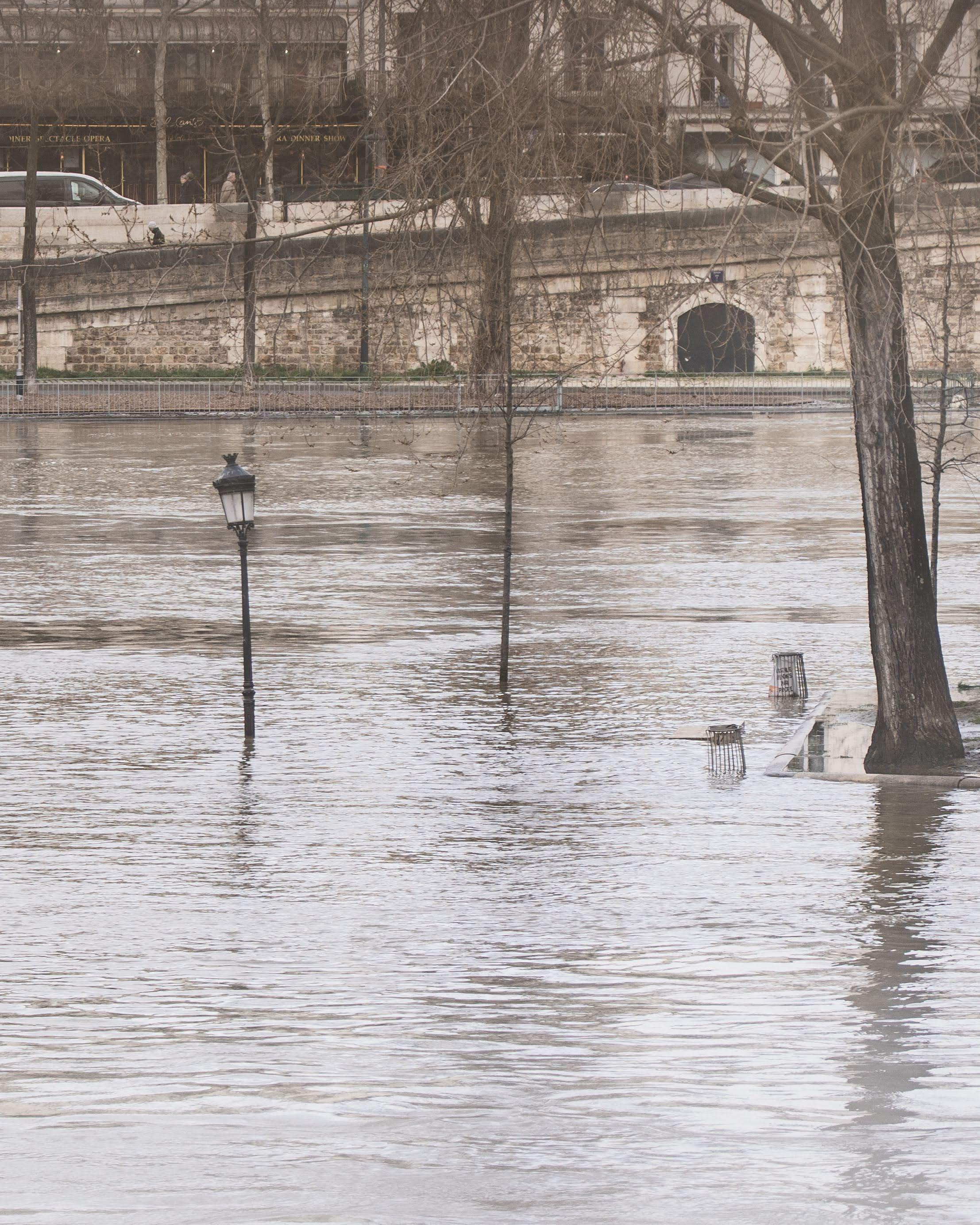
- The Great Flood of 1910: It traumatised the capital and led to the construction of large reservoir lakes upstream.
- UNESCO classification (1991): The banks of the Seine are recognised for their exceptional cultural value.
- The return of swimming: The great challenge of the 2020s has been to make the river ‘clean’ again for water sports (a direct legacy of the preparations for the Olympic Games).
The history of the Seine is not a long, quiet river, but a story of mutual transformation. From a protective barrier for the Gauls to a medieval trade route, over the centuries it has become the capital's most beautiful monument.
Featured photo: Amandine Goetz